Kingdom Hearts 2 and Birth By Sleep were fun games that deserve a lot more to themselves
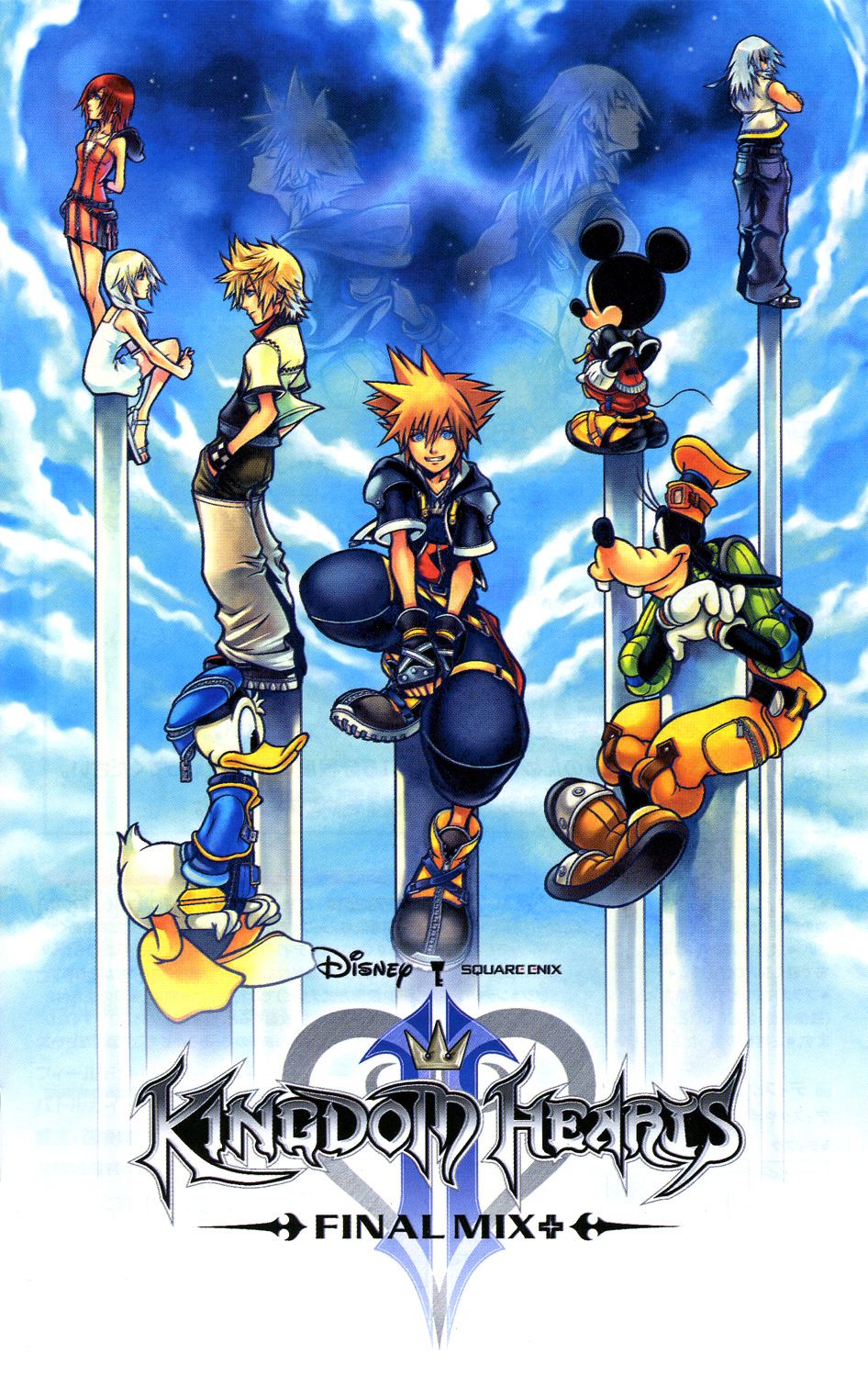
MAJOR SPOILERS FOR BOTH GAMES AHEAD. YOU HAVE BEEN WARNED#
I played through Aqua’s story in Birth By Sleep first, thinking it’d make a good Archipelago game, then played both her and Ventus’ stories in an Archipelago randomizer; I haven’t played through Terra’s story at all yet, but if I return to the game outside of randomizer, I might. Afterwards, I played through 2 Final Mix over the course of a week. I enjoyed both for different reasons; the combat in both games was very fun, the progression was interesting, and at its high points, the lore was captivating. I do acknowledge that I played them out of order and that isn’t exactly the best, leaving me with a weird slice of lore insight, but I think I at least partially made up for that by watching Do No Harm in two sittings after finishing 2 (I do jest, but knowing what I already did about KH lore, this helped me understand the bits I missed surprisingly well for what it was); beyond that, I think 2 is a wonderful Archipelago game, despite its currently dismal Linux support, and Birth By Sleep does a passable job on that front as well for how short it is; in fact, I’ve been test genning my YAML for Kingdom Hearts 2 recently, and it’s been very fun so far.
What this series does well, it does incredibly, but what it does poorly can be just as grating. What’s weirder to me is that what one game between the two I played fails to do, the other does wonderfully, most times. I wonder how I’d like Dream Drop Distance if I played it again as an adult, because I have a feeling it could either disappoint or be the best of both worlds.
Combat and character progression: Each game gets it right in one way, but falls short in others#
Birth By Sleep is short. Its progression for all three characters is comparatively limited, 20 levels shorter than KH2 with much faster zones of progression that almost feel like they start and end in a heartbeat (unless you’re playing them in Archipelago, after which you will dread that stupid maze in Maleficent’s castle for a long time). What’s weird is that it does this while flooding the game with mechanics on top of that: The command deck, finishers + two layers of command styles, shotlock, and D-links, just to top it all off. It’s unfortunate that the latter two systems feel like afterthoughts, especially because they also feel like they would only ever work in BBS, partially because shotlock feels optional, even if it is strong (especially as some commands replicate its niche anyways), and the entire game can easily be completed without worrying about the D-Link mechanic at all and just building your own deck up to par instead, which is what I did (not helped by the fact that D-links just seems to be inaccessible at points where you’d actually need them for health and cooldown resets, which is weird, because Sora can basically do that exact same thing with a drive form, especially Limit Form, in KH2FM).
What Birth By Sleep is at its best is a game centered primarily around the command deck and command styles, both of which are really fun systems and the former of which I have fond memories of thanks to my time playing Dream Drop Distance as a kid (though it’s clear that 3D evolves considerably on the system). Command styles are arguably the easier thing to talk about first, because I’m going to have a ton of things to say on the actual composition of a command deck itself: They are satisfying to pull off and fun to use, to which they feel more akin to what I like about drive forms while being as flexible as BBS allows combat to be, mostly compared to 2. Command styles feel powerful and somewhat limited without being a chore to get one’s hands on in a way that gets me to not really complain about the base kits, and that’s quite nice; to an extent, it makes up where progression in this game doesn’t tread.
Though I’m very fond of the command deck system, I ultimately have mixed feelings on the subject matter thanks to how fun the system is and how flexible it makes kit building in this game compared to 2, but the meta I eventually find myself settling into in it. The command deck system is super fun; you can build into either strike or magic without much worry and commands come back in their own time, plus it means you don’t have to fuss over potion management ever like you’re forced to at times in 2. It is fun, it makes combat feel responsive even without command styles, and it is incredibly, incredibly versatile to just how you want to do things. The issue is that, thanks to having zero checks and balances on what you can run besides multislot commands that ultimately aren’t worth their weight in many builds, I can easily just pivot my build into magic and run a relatively safe build comprised entirely of Thundaga, Curaga, and Mine Square, and the endgame bosses make me feel like I have to do that to stand a chance: Fire and Blizzard are too unreliable for what they are, strike attacks that don’t work like Sonic Blade feel too risky with their windups, and CC is useless against bosses (save Mine abilities against Vanitas), so the easiest build to run just ends up doing a lot more than I feel it should. The command deck did its purpose, but I wish there was a way for it to do that and to feel better about working with it without a loadout like that.
2, on the other hand, has a very different, more traditional system, albeit with a party behind you to offset some of its limitations, such as the use case of Cure. The issue I had with nearly all of KH2’s extra meters is that they all feel really limited in application: The drive gauge can fill up quite slowly at times, but worse off (without drive forms to refill MP and HP for you), the MP gauge has so much downtime in its usage: MP orbs from opponents aren’t ever nearly enough to sustain the meter save for one or two more attacks (as I abused in the Thousand Heartless War to level up Limit Form), and MP charge is very slow, further accentuated by the fact that so many things put you in MP Charge: Overcasting any magic type that isn’t Cure, using Cure a single time, and calling in a Limit (which made me not want to use Limits at all), as well as I’m sure other things I’m neglecting to mention, and in MP Charge, you’re left without tools like Reflect or Cure that’d save you so much hassle if they were just there. Again, the drive forms do help in offsetting that deficit, but if you decide to choose Valor Form, or worse, accidentally roll Anti Form, you’re left without the reasonably safe option that is Leaf Bracer Cure.
What makes up for the loss in MP is the entire drive gauge mechanic, as it ends up acting as a second invincible heal and a full mana regen whenever used, on top of the fact that it makes Sora feel all the more satisfying in combat. Valor Form is fun even without access to magic, Wisdom Form has some very nice use cases while making most magic types feel more fluid to use (especially the stationary Fire, which, despite its utility, feels a lot less useful here than it does in any command deck game), Limit Form is a literal cheat code in fights where Donald or Goofy isn’t present, Master Form is the coolest shit ever and makes magic cooler than it has ever been, Final Form is just as cool as Master Form already was (which I say because I haven’t really gotten much of a chance to use it over Master Form, unfortunately), and summons… Personally, I’d rather just pop a potion on Donald and tag into Master or Final Form instead. My only issue with the drive forms is how annoying they can be to level up, requiring me to use a ton of forms and then inevitably get punished when Anti Form procs instead, especially because they end up gating some useful movement tools (which are more useful if you don’t play on Proud Mode, but are just massive quality of life to have at all, which the randomizer is really showing me); for one, I was pissed when I realized Glide was locked behind Final Form of all things (which is fair, just annoying), even after I spent a lot of time leveling up the other forms to get those movement tools, which are all still quite cool.
That does bring me back to one more thing about Birth By Sleep that upsets me to no end: Of all three of the characters you get to play as, none of them actually have a complete kit; sure, none need it, but having access to Glide in Disney Town’s miserable platformer section was such a breath of fresh air after playing Aqua through. Sora only gets Glide at the literal end of the game, but at least he actually gets it; Aqua and Terra never even get Glide to begin with, and it makes handling them feel all the worse. Even though Flowmotion exists to make up for it, it is still quite disappointing to know that Riku doesn’t get Glide in KH3D, even though Sora does. …Maybe another game.
Where each game drops the ball on lore and where they ace it instead#
Kingdom Hearts 2 has an incredible final chapter: A reunion with Riku, Kairi using a keyblade, Ansem the Wise revealing himself, and the culmination of so much that was barely even drip-fed throughout the Kingdom Hearts story. Even though it wowed me thoroughly, it pointed out how poorly paced the entire story of the game is: We see so much elaboration on Roxas’ life at the start of the game, only to have to wait until the very end of the game to fight him, and for Sora to learn what really happened, despite literally having a photo of the guy that Riku airdropped him. I feel like half of what happened in the World That Never Was could’ve been spread out across the game, as opposed to Sora jumping from world to world only to find dead ends; while both games are absolutely burdened by the Disney plotline quota, this game falls victim to it a bit too hard, when Riku, Kairi, or someone like Axel showing up earlier would’ve made things a million times more interesting on the throughline. I would’ve massively appreciated the plotline that Ansem is back all of the sudden, but now as an ally with a keyblade, and Sora is having to grapple with his trust before realizing on his own that yes, that is in fact Riku; on that note, I do think Riku suddenly getting his old form back feels really forced thanks to how close to the endgame it is, and I would’ve loved the atonement to happen over time with his first appearance to the end as opposed to suddenly because Ansem the Wise was an idiot and nothing else. It’s definitely telling of 2’s plotline that I have literally nothing to say about most of the rest of the game (save Hollow Bastion, which I do appreciate as that sort of non-Disney focused zone and a proper place to drive the plot): So much happens in the World That Never Was that the lead-up to it is practically lost.
Where 2 fails to pace itself, Birth By Sleep does a much better job at the same task, even with its shorter narratives: Key moments are executed well and contain inklings of the important story that do build up nicely when it’s finally time to go to the Keyblade Graveyard, namely the encounters with Maleficent that demonstrate her rise to power as commander of the Heartless in 1 and 2, as well as, at least in Aqua’s case, the encounters with Vanitas that tie into story points and tease her final boss. The pacing is nice, any cross-encounter between the trio makes for good, lore-filled moments, and there’s a lot of good attention to detail in the overarching plot. It’s a shame that the Disney quota plotlines and a lot of the voice acting are dry, stale, and at times, just hard to listen to, in a way that makes me wonder how they managed to do so much better with a game released five years earlier. This point is the reason I’m even reviewing my experience with these games together, because actually going back to play KH2 is such a breath of fresh air when it comes to enjoying a game for the story, even if it is a lot longer and harder to sit through all at once. It’s a shocking world of difference.
In short, if you take 2’s strong plot and give it the pacing you gave Birth By Sleep, you’d be in a lot better hands than the story I ultimately sat through in 2.
How do they play in Archipelago?#
To conclude this all, I’m going to speak on the thing that ultimately drove me to play these games in the first place: The randomizer integration. As I’ve mentioned before, it’s the sort of thing that’s actually getting me to play through new games recently, which is definitely a breath of fresh air compared to the stale routine I found myself on for a while before of wanting to play so many things I would never get to; in the case of both of these games, I think I definitely reaped something positive with enjoyable implementations all the way around, one alright and one unsurprisingly great.
Birth By Sleep’s implementation is nice, somewhat short and sweet for what it is while not having too much to do to get to that point, but suffers from a key issue, being that commands as randomizer items is a gate easily circumvented by the game. You only need one of a command to buy many, and commands will often come as part of bundles you get for visiting new zones anyways, so it’s difficult to track logic when Fire and Thunder are supposed to be blockers that you can instead just buy at the store if you go long enough without them. Navigation in this game isn’t nearly as interesting as it is in 2, especially given movement at the start in that game, so it isn’t as interesting, and all you really need to get a loadout that will get you through Keyblade Graveyard is Thundara and Cura, which aren’t that hard to come across when your game has so many items. It’s an easily defeatable implementation that’s balanced out by its other progression items and fun combat to make something that’s nice, but not great like 2 is.
2, on the other hand? Thanks to a very robust array of mods, including one that turns the Garden of Assemblage into an access hub for all of the worlds in the game, as well as the option to give yourself a level of all of the movement abilities right at the start, progression isn’t unnecessarily difficult, save for the amount of farming one needs to do in the World That Never Was in order to compete in some of the later zones, as unlike Birth By Sleep, zone levels are not adjusted to their point in progression, a quality of life change I really wish was present here. It is definitely upsetting that, as a Linux user, I have to install an entirely seperate Archipelago client through Proton to play with any reliability, especially given the amount of hassle that is to boot compared to the much more streamlined Birth By Sleep implementation that feels just like any other game would, so I’m looking forward to playing the updated client whenever it finally comes out of beta; that’ll be a game changer.
I’ve played Birth By Sleep multiple times in multiworlds now and am still pushing through my test gen of 2, but am looking forward to playing it the next time I get the chance to toss a YAML somewhere. I had a ton of fun the first time around and I know I’ll have a ton of fun again.